Smoke movement
Discuss what burned, airflow, openings, duration, and connected spaces. Fine residue may appear beyond the room of origin or settle on surfaces that look otherwise unaffected.
PROPERTY MANUAL // CHARLOTTE FIRE RECOVERY
Four connected recovery tracks
Treating each condition as an isolated problem can create gaps. The practical plan should show how the tracks interact and why one step comes before another.
CALL THE RECOVERY LINE(980) 333-4525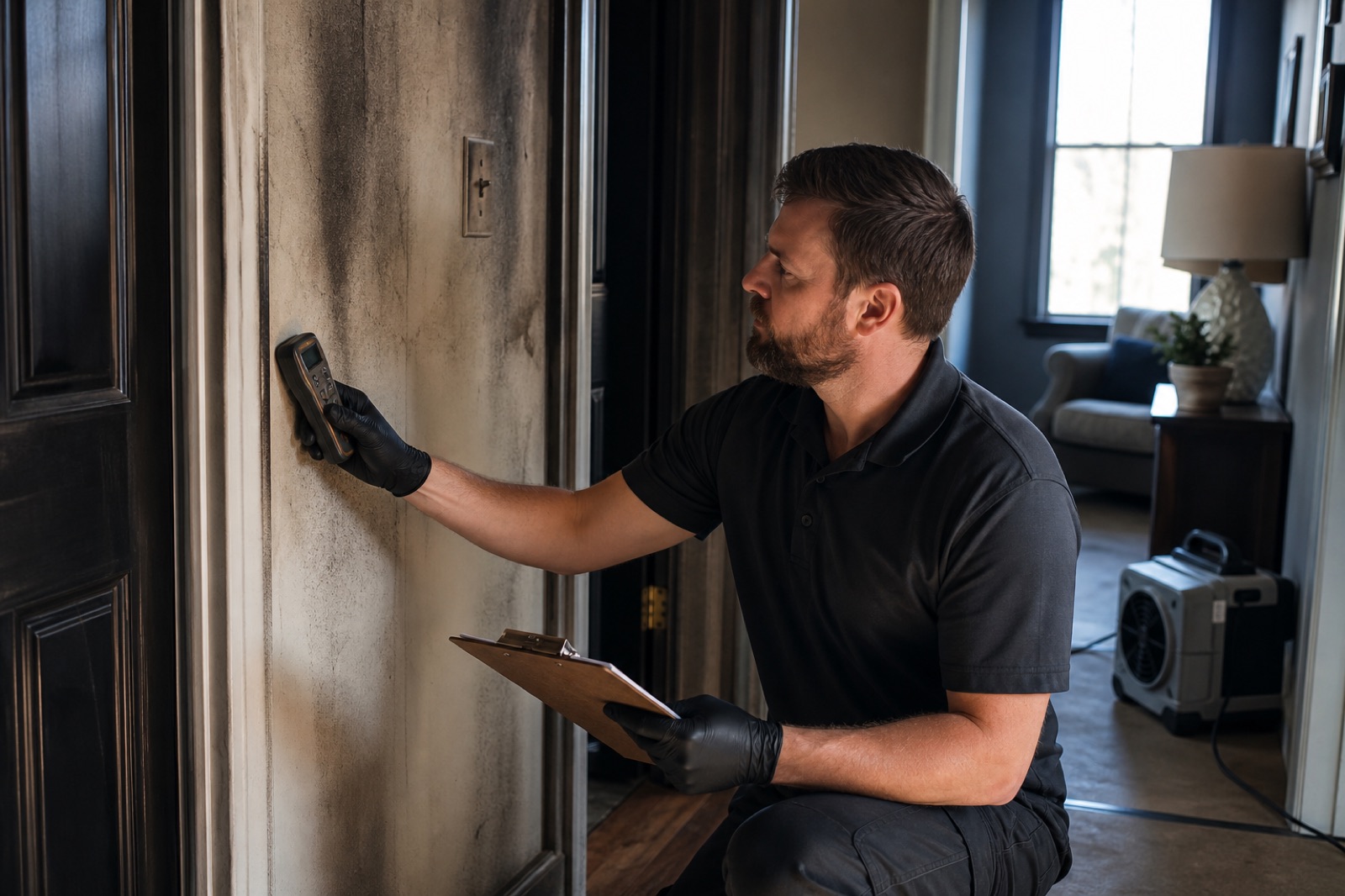
Discuss what burned, airflow, openings, duration, and connected spaces. Fine residue may appear beyond the room of origin or settle on surfaces that look otherwise unaffected.
Suppression water follows gravity, gaps, penetrations, and assemblies. Wet materials may be visible, concealed, or distributed differently than smoke residue.
Drywall, insulation, framing, wood finishes, masonry, metals, glass, plastics, cabinetry, and flooring have different heat, residue, moisture, and cleaning considerations.
Electronics, documents, furniture, textiles, art, sentimental goods, and replaceable items should be sorted by priority, material, exposure, access, and practical value—not one blanket rule.
Access, contents movement, debris handling, evaluation, cleaning, removal, drying, odor work, and repair coordination should form a sequence that avoids rework and protects completed areas.
Ask the company to explain what is observed, what is possible, what requires evaluation, and what each proposed step is intended to accomplish. Clear reasoning is a meaningful quality signal.
Fire losses differ by fuel, heat, airflow, building layout, water, finishes, contents, and access. Describe what you know, identify what remains uncertain, and ask the company to explain the reasoning behind the proposed sequence.