Begin with safety and scene release
If a fire is active, call 911. Do not enter until authorities say it is safe. Confirm restrictions, utilities, structural concerns, and any responder instructions before restoration activity.
PROPERTY MANUAL // CHARLOTTE FIRE RECOVERY
A property-owner field guide
After the emergency, useful decisions begin with a clear record of what happened, how spaces connect, and which materials and priorities are involved.
CALL THE RECOVERY LINE(980) 333-4525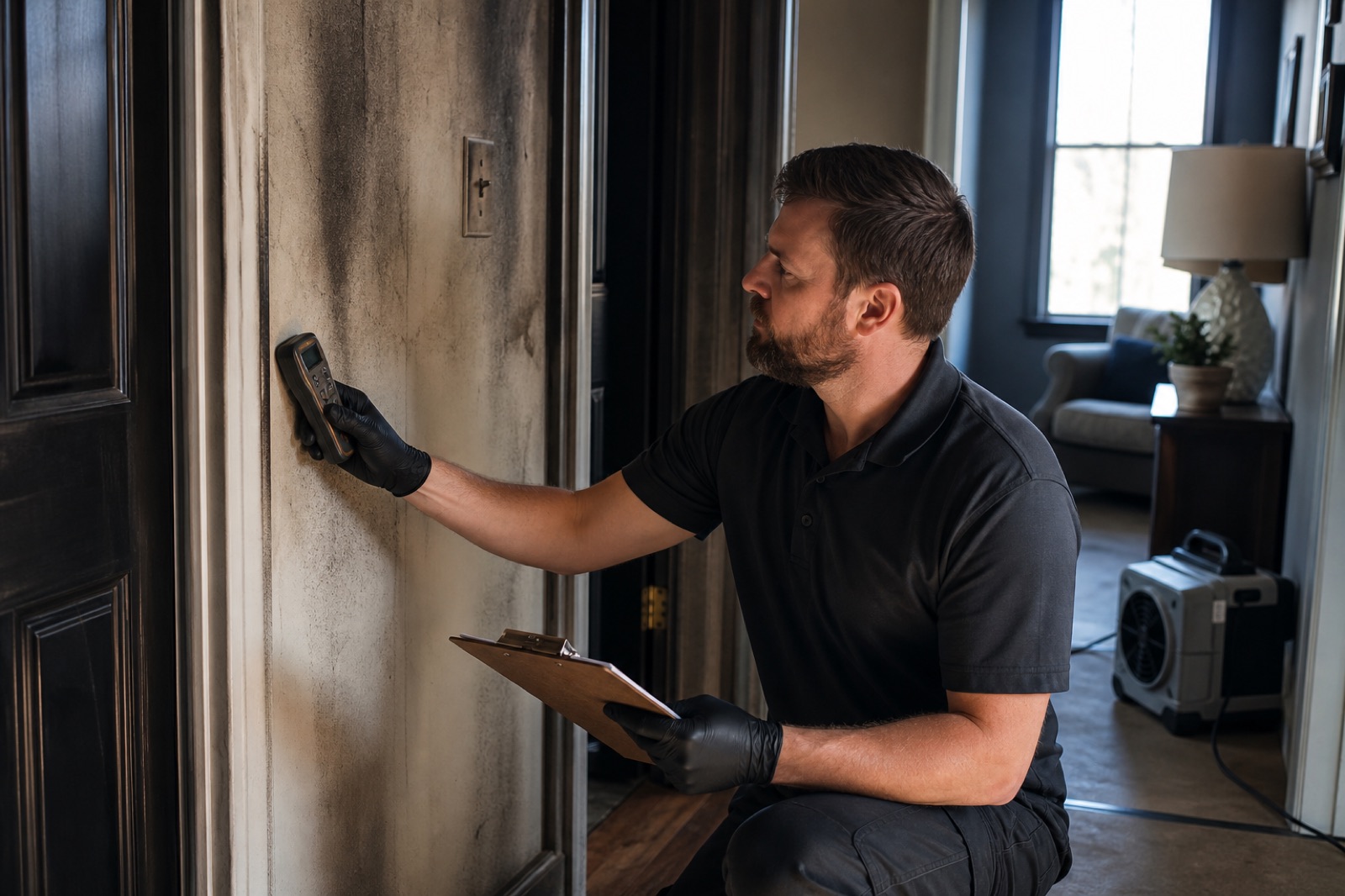
If a fire is active, call 911. Do not enter until authorities say it is safe. Confirm restrictions, utilities, structural concerns, and any responder instructions before restoration activity.
Record the room of origin, timing, what burned, which doors or windows were open, whether HVAC was operating, and where responders used water or opened assemblies.
Consider hallways, stairs, attics, wall openings, returns, supply registers, closets, shared walls, and rooms above or below. Visible marks are evidence, not always the complete boundary.
Residue type and behavior depend on fuel, heat, air movement, exposure, and surface. Odor work should connect to residue and source decisions rather than masking alone.
Ask where water traveled and which porous materials, cavities, flooring, cabinets, insulation, framing, and contents may be wet. Drying and fire-cleanup sequencing should support each other.
Identify essential documents, electronics, textiles, furniture, sentimental items, access needs, and repair goals. A clear scope should show where owner priorities affect handling and sequence.
Fire losses differ by fuel, heat, airflow, building layout, water, finishes, contents, and access. Describe what you know, identify what remains uncertain, and ask the company to explain the reasoning behind the proposed sequence.